The complete guide to Vegan Belgrade
There are dishes, ingredients, and an entire food vocabulary that work in your favour as a vegan, if you know what to look for. That’s what this guide is for.
If you’re searching for vegan food in Belgrade, you’ve probably already read that Serbian cuisine centres around meat. That’s entirely true and no guide to vegan Belgrade should pretend otherwise.
Meals like ćevapi or pljeskavica with kajmak cream are the things Serbia is known for, and they’re everywhere. But that’s only part of the story.
Introduction
Belgrade’s vegan scene has grown steadily over the past few years. There are now dedicated vegan and vegetarian restaurants across the city, from small neighbourhood spots to places that draw a loyal local crowd.
The scene is currently concentrated in the city centre and the older part of the city, but it’s spreading. The people who are eating at these places aren’t just tourists or expats. The majority of customers at many of Belgrade’s vegan restaurants are locals.
Beyond the dedicated restaurants, Serbian food culture itself has more plant-based depth than its reputation suggests. Traditional dishes that happen to be entirely vegan can be seen on menus across the city, in places that would never describe themselves as vegan.
Many bakeries also carry pastries and breads made without animal products. Green markets sell seasonal produce that locals have been cooking with for generations. You don’t need a specialist restaurant to eat well in Belgrade. You just need to know what to look for.
This guide and our community aims to cover all of it. From the food culture that makes Serbian capital more vegan-accessible than most people expect, dedicated spots worth knowing about, to the helpful phrases that will allow you to order with confidence, and the neighbourhoods worth exploring.
Whether you’re in Belgrade for a weekend or a longer stay, eating vegan in Belgrade is entirely possible. It just helps to have a local perspective.
Is Belgrade worth visiting in 2026?
Belgrade is not a city that stands still. If you visited a couple of years ago and are coming back now, you’ll notice the difference. More direct flights, more international visitors, more places opening in neighbourhoods that used to be quiet.
The numbers tell the story clearly. Belgrade welcomed over 1.3 million foreign visitors in 2023, and 2024 was a record year, with the city’s airport handling 8.4 million passengers, more than a third above pre-pandemic levels.
The numbers also show that this isn’t a temporary spike and Belgrade has become one of Southeast Europe’s fastest-growing city break destinations. The momentum is still building and EXPO 2027, scheduled for the summer of that year, is expected to bring millions more.
Foreign tourist arrivals to Belgrade, 2019 – 2026 (f)
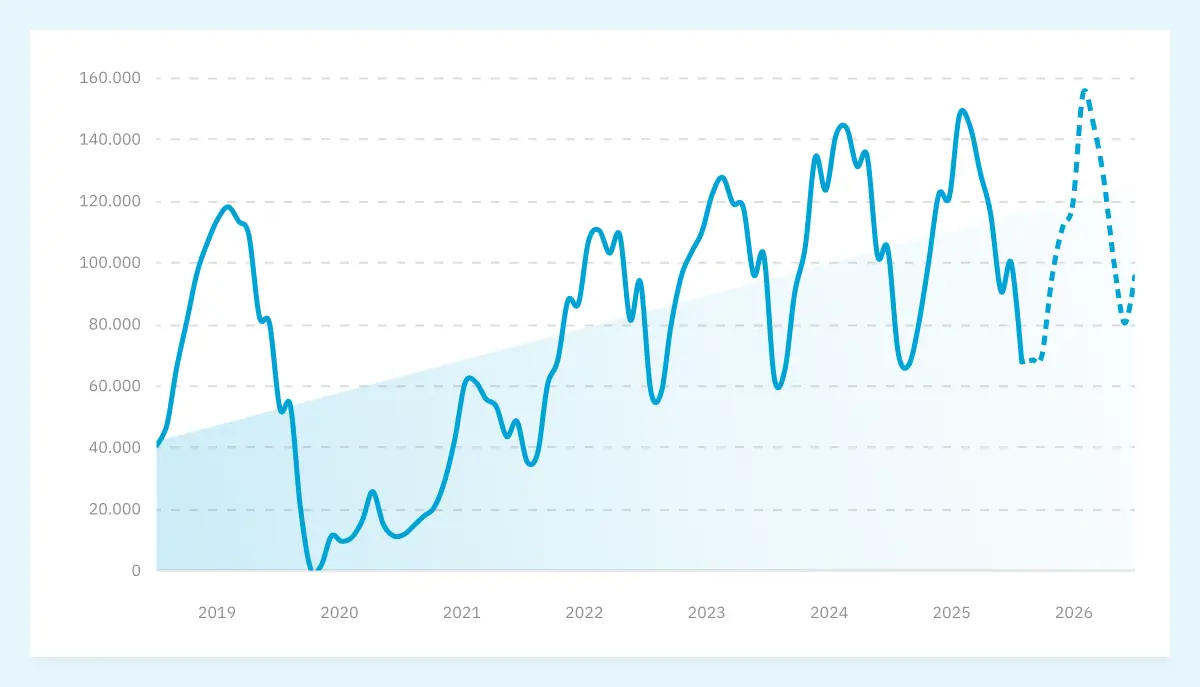
Data visualisation by VIZDATA. Data source: Statistical Office of the Republic of Serbia
More visitors means more demand, and that demand is reshaping what Belgrade offers. The city received its first Michelin stars in 2025. National Geographic has called Belgrade the capital of “new Balkan” cuisine, and that description fits. A generation of chefs and restaurant owners is shaping the city’s food identity beyond its grilled-meat reputation. This matters for the vegan scene directly.
Research consistently shows that more than half of leisure travellers choose their destination at least partly because of food.
As Belgrade attracts more visitors who care about what they eat, the restaurants, bakeries, and cafes that serve them are adapting. New vegan and vegetarian spots have opened. Traditional places are becoming more aware of what plant-based visitors need. The food culture is broadening, and it’s happening quickly.
Belgrade is still a meat-loving city. That hasn’t changed and probably won’t. But the Belgrade you’re visiting today in 2026 has more options, more awareness, and more variety than at any point in its history. The vegan scene is part of that shift, and it’s worth paying attention to.
Serbian fasting food and what it means for vegans in Belgrade
Serbia is a predominantly Orthodox Christian country, and the Orthodox tradition includes extensive fasting periods throughout the year. During these periods, practicing Christians exclude meat, dairy, and eggs from their diet entirely. This has been the case for centuries, long before the word vegan existed in any language.
The food prepared for these fasting periods is called posno/posna, which translates roughly as “fasting food” in Serbian, and it’s a concept that every local understands.
This isn’t a niche dietary label. It’s a deeply rooted part of how this country eats, tied to tradition, religious observance and seasonal rhythms that shape the food supply from farms and markets all the way to restaurant kitchens.
For vegan visitors, this matters enormously. The Orthodox calendar designates roughly 180 to 200 days per year as fasting days. And no, that’s not a typo.
Nearly half the calendar year falls under some form of dietary restriction that excludes most animal products. There are four major fasting periods.
| Fasting period | Duration |
|---|---|
| The Great Lent/The Great Fast | 7 weeks leading up to Easter (the strictest) |
| The Dormition Fast | 14 days in August |
| The Christmas Fast/Nativity Fast | 40 days leading up to Christmas |
| The Fast of the Apostles | Varies in length |
On top of these, Wednesdays and Fridays are fasting days year-round for observant Christians.
What does this look like in reality? During major fasting periods, especially The Great Lent, the difference in food consumption is visible everywhere.
Some bakeries mark items differently based on whether or not they are OK to consume during lent (look for posno label), and the selection is wide: breads, pastries, cakes, and savoury pies, all made without dairy or eggs.
Supermarkets stock entire sections of posno-labelled products year-round, from hummus and nut butters to sweets and ready meals. Even outside fasting periods, these products are readily available and they’re part of the permanent food landscape.
In restaurants, it’s just as practical, as staff at virtually any traditional Serbian restaurant understand this concept without hesitation. The cultural framework already exists and the vocabulary is already understood, but you can of course list ingredients to avoid.
There is one important detail to be aware of though. Some fasting rules allow fish on certain days, which means not everything labelled posno is automatically vegan, so you also must ask for food that’s not fish. This small addition should make your request completely clear and remove any missunderstanding. We’ll try and cover more useful phrases in this and our other guides.
It’s worth being honest about the seasonal dimension too. Your options expand significantly during the major fasting periods, when the whole city is eating this way and bakeries and restaurants respond with broader selections. Outside those periods, the food is still available, but it’s less prominently displayed. If your trip happens to overlap with The Great Lent or the Nativity Fast, you’ll notice the difference immediately.
None of this is designed for vegan travellers. It’s a religious and cultural practice with deep meaning for the people who observe it. But the practical effect is that Belgrade has familiarity with plant-based cooking that most European cities simply don’t have.
Belgrade’s vegan restaurant scene
Belgrade currently has over 20 vegan restaurants and vegetarian restaurants with substantial vegan options. We know it’s not close to London or Berlin in that regard, but it’s a community that’s been growing steadily.
Most of Belgrade’s vegan and vegetarian restaurants are concentrated in the city centre, the Stari Grad and the Dorćol neighbourhood, which is where you’ll likely spend much of your time as a visitor anyway. But the scene isn’t limited to the old town. Options have been opening across the river in Novi Beograd and Zemun, as well as along the waterfront, which has changed significantly in recent years.
The range is wider than you might expect. You’ll find fully vegan places serving everything from raw food and cold-pressed juices to comfort dishes like burgers and ramen. There are grab-and-go spots near the main pedestrian streets for when you need something quick.
There are small restaurants with daily-changing menus that draw a lunchtime crowd of regulars. Some places combine food with other things: yoga, zero-waste principles, bicycle delivery. The scene is varied enough that you won’t feel like you’re eating the same meal twice.
Compared to other capitals in the region, Belgrade sits in a solid middle ground. The scene is smaller than what you’d find in Budapest or Prague, both of which have had more time and more international visitors to help and develop their plant-based offerings.
Belgrade is competitive with cities like Zagreb and Sofia, and well ahead of other regional capitals. It’s worth noting that Belgrade has an advantage over its non-Orthodox neighbours due to a tradition which makes plant-based cooking familiar here in a way that it simply isn’t in cities without that same heritage.
One thing that stands out about Belgrade’s vegan scene is who eats there. At many of the city’s vegan and vegetarian restaurants, the majority of customers are locals so this isn’t a scene built for tourists and expats alone.
Local interest has been growing, driven mainly by health and curiosity rather than ethics or ideology. That local base is what gives the scene its stability. Places that rely only on passing visitors tend to come and go. Places that have a neighbourhood following tend to last.
The wider ecosystem supports the restaurants too. Many vegan directories list Belgrade with curated recommendations, and several travel publications now include the city in their vegan destination coverage. There are signals of dedicated vegan food tours starting soon in Belgrade and the annual vegan festivals, running for over a decade, drawsthousands of visitors and many exhibitors each year.
Even outside the dedicated vegan spaces, mainstream restaurants and craft breweries have started adding plant-based options to their menus. The direction is clear, even if the pace is gradual.
Belgrade’s vegan restaurant scene is not yet the reason people book a flight here. But for anyone who arrives wondering whether they’ll eat well, the answer is yes. The options are available, the quality is genuine, and the scene is getting bigger year by year.
What can vegans eat at a traditional Serbian restaurant
You don’t need a dedicated vegan restaurant to eat well in Belgrade. Serbian cuisine has a long tradition of dishes made entirely without meat, dairy, or eggs. These aren’t modern adaptations or afterthoughts. They’re recipes that have been part of the food culture for generations, rooted in the fasting tradition we covered earlier.
The key concept to understand is the word posno/posna.
When you see it in front of a dish’s name, it means the fasting version: made without animal products. Many of the dishes you’ll encounter on Serbian menus have a posno/posna variant, and in most cases, these aren’t lesser versions. They’re traditional recipes in their own right, with their own ingredients and their own loyal following.
Here are some of the dishes worth knowing about.
Ajvar is something you’ll see on many starter menus in Belgrade restaurants. Most visitors assume it’s a condiment, something to spread on bread before or alongside a main course. For Serbians, it’s much more than that. Families spend entire autumn weekends roasting red peppers and making ajvar from scratch, and everyone has a strong opinion on whose is best. Order it as a starter with fresh bread and treat it as a dish in its own right. It’s almost always vegan, though it’s worth confirming with the staff.
Prebranac is Serbia’s version of baked beans, though richer and more complex than that description suggests. Slow-baked beans with onions, seasoned simply and served warm. It’s a staple of home cooking, available at most traditional restaurants, and it’s filling enough to work as a main.
You’ll see sarma on many menus. Sarma is a cabbage roll, typically stuffed with minced meat and rice. What most visitors don’t realise is that the posna version exists too. Posna sarma replaces the meat with rice, walnuts, vegetables or mushrooms, wrapped in the same fermented cabbage leaves, or sometimes vine leaves. It’s especially common during fasting periods, but many restaurants serve it year-round.
Đuveč is a slow-cooked vegetable stew, typically made with peppers, tomatoes, aubergine, and whatever is in season. It varies from kitchen to kitchen and changes with the time of year.
Čorba od pečuraka is mushroom soup and another reliable vegan option: rich, warming, and available at most traditional restaurants.
Posna proja is a cornbread made without dairy or eggs, is a simple and satisfying side that pairs well with almost anything.
The general principle is straightforward. When you’re sitting in a traditional Serbian restaurant and looking at a menu full of grilled meat, don’t assume there’s nothing for you.
Ask for posno options, or look for the word on the menu. The staff will most likely understand what you need and with a little explanation you can enjoy a great meal.
How to ask for vegan food in Serbian
Between English, translation apps, and the word posno you just learned, you can communicate what you need at almost any restaurant in Belgrade. The harder part is knowing how traditional Serbian kitchens work, because some of the things that matter most to you as a vegan won’t appear on any menu.
Animal fat is the big one. Traditional Serbian kitchens use lard, known locally as mast, for cooking and baking. Bread, pastries, beans, and some vegetable dishes may be prepared with it as a matter of course.
This is less common at newer restaurants and places that cater to a mixed crowd, but at older, more traditional spots it’s standard practice. If you’re unsure, it’s worth asking whether something is cooked in oil rather than fat.
Kajmak and cheese have a way of appearing uninvited in meals as well. Kajmak is a thick, rich dairy cream that Serbians add to almost everything: grilled vegetables, beans, bread, meat dishes. White cheese is similar in its ubiquity. Neither will always be listed on the menu as a separate ingredient. They’re just part of how the dish arrives. If you don’t want dairy on your plate, mention it when you place the order, not after the food lands on the table.
Soups are worth a moment’s thought. A čorba that looks entirely vegetable-based, with mushrooms, potatoes, greens, may still be made with meat stock. The ingredients you can see aren’t always the whole picture. Asking whether the soup is vegan is the quickest way to check.
If you describe yourself as vegetarian, be aware that the word carries a broader meaning in Serbia than in most of Western Europe. Many people here understand it to include dairy and eggs. You may receive dishes with cheese, cream, or egg-based ingredients and have everyone involved believe they got it right. Being specific about what you don’t eat avoids this entirely.
Two smaller things worth knowing. Honey is permitted under Orthodox fasting rules, so posno-labelled products and dishes can contain it. If you avoid honey, check the label or ask.
And as we covered earlier, some fasting traditions permit fish, which means posno on its own doesn’t guarantee a dish is entirely plant-based. Making sure to mention that you don’t consume fish in your request removes that ambiguity.
None of this should put you off. Belgrade is a navigable city for vegan visitors, and most people will genuinely try to help once they understand what you need. You just eat better here when you know what to look for before you sit down.
Vegan coffee and desserts in Belgrade
Belgrade runs on coffee. It’s something people sit down for, sometimes for an hour or two, usually with friends, often multiple times a day. It’s not just something people grab on the way to work. This is one of the easiest elements of the city to enjoy as a vegan, because the most traditional way to drink coffee here is already plant-based.
Serbian coffee, called domaća kafa, is brewed in a small pot and served black, strong, and without milk. It carries similarities to coffee from other regions in the Mediterranean, and you’ll find it at kafanas, traditional cafes, and most restaurants. No modification is needed, you can just order it and settle in.
If you prefer espresso-based drinks with milk, the availability depends on where you are. Modern cafes in tourist-friendly parts of the city like Dorćol and Vračar increasingly stock oat, almond or soy milk, and it’s becoming more common each year. Further from the centre, or at older traditional kafanas, plant milk is less likely to be available. It’s always worth asking, but don’t count on it everywhere.
Belgrade’s bakeries are where things get interesting for vegan visitors. The city is full of them. A pekara is not a specialty shop; it’s a basic part of daily life, and most neighbourhoods have several.
During fasting periods, bakeries expand their posno selection significantly: pastries, layered cakes, savoury pies with mushroom or spinach fillings, all made without dairy or eggs. Some bakeries mark these items with stickers during Lent, making them easy to spot. Outside the major fasting periods, posno baked goods are still available but the variety is smaller. A few bakeries in the central neighbourhoods carry vegan options year-round.
For something sweet beyond the bakeries, it’s worth knowing that Serbian supermarkets stock posno-labelled desserts, biscuits, and sweets in most aisles. These aren’t tucked away in a health food corner. They sit alongside everything else, because they’re made for a broad market, not a niche one.
Quick snacks between meals are more limited. Belgrade’s street food leans heavily toward grilled meat, and the grab-and-go options for vegans are thinner than the sit-down ones.
That said, bakeries fill the gap well with savoury pastries and bread. In summer, street vendors sell roasted corn. In autumn, you’ll find roasted chestnuts. And the city’s green markets, the pijaca, are always good for seasonal fruit, fresh vegetables, and dried nuts if you want to put something together yourself.
Between the coffee culture and the bakeries, the spaces between meals in Belgrade are easy to fill. You won’t go hungry, and you won’t need to rush.
Vegan grocery shopping in Belgrade
If you’re staying in an apartment or simply want to stock up on snacks for the day, Belgrade’s supermarkets are more useful than you might expect. The posno labelling system that shapes restaurant menus works in retail too, and it makes shopping significantly easier.
Walk through any major supermarket in Belgrade and you’ll find products marked posno across most aisles, not confined to a special health-food section. Hummus, nut butters, biscuits, cakes, crackers, and sweets all carry the label. These products sit alongside everything else because they’re produced for a broad market. For a vegan visitor scanning shelves in an unfamiliar language, posno on the packaging is a reliable shortcut as is the vegan label.
Plant-based milks are increasingly available. Oat, soy, and almond milk can be found at larger supermarket chains, typically in the organic or health-food aisle. The selection is narrower than what you’d find in a Western Europe supermarket, but it’s there and it’s growing.
Vegan cheese and mock meats are harder to come by, but a few options do exist, mostly from domestic and regional brands. The variety is again limited compared to Western Europe, so if these are staples for your diet, it’s worth adjusting the expectations.
For fresh produce, Belgrade’s green markets are the best option and one of the more enjoyable parts of daily life here. The pijaca are open-air markets found across the city, selling seasonal fruit, vegetables, dried nuts, olives, pickled goods, and herbs. Prices are typically lower than supermarkets, although not consistently, and the produce is definitely fresher. Kalenić in Vračar and Zeleni Venac near the city centre are two of the most popular, but most neighbourhoods have their own local pijaca market, sometimes located in front of supermarkets.
For a stay of more than a couple of days, mixing restaurant meals with some self-catering is practical, affordable, and gives you a closer feel for how the people of Belgrade actually eat. A bag of fresh produce from the market, some bread from the bakery, a jar of ajvar, and you have a meal that’s both vegan and entirely Serbian.
Vegan options outside the city centre
Most guides to vegan eating in Belgrade focus on Stari Grad, Vračar and Dorćol, and for good reason: that’s where the majority of dedicated vegan and vegetarian restaurants are. But Belgrade extends well beyond the old town, and if you’re staying across the river or exploring further out, it helps to know what’s available.
Novi Beograd
Novi Beograd sits on the left bank of the Sava, connected to the centre by a short bus or tram ride. The feel is different here: wide boulevards, residential blocks, large shopping centres. It’s where many Belgraders actually live. The dedicated vegan scene is thinner than in Stari Grad, but it’s growing.
A handful of vegan and vegetarian spots have opened in recent years, and the shopping centres house cafes and restaurants with increasingly varied menus. Traditional restaurants in the area serve posno food just as reliably as their counterparts across the river. Many international companies have their offices in Novi Beograd so new vegan options are constantly showing up to accommodate the business people.
Zemun
Zemun has its own identity entirely. Technically part of Belgrade but historically a separate town, it has a quieter, more calm atmosphere, particularly along the Danube quay. Dedicated vegan restaurants are not so common, but the traditional food culture applies: posno dishes are understood and available, the bakeries carry fasting-period selections, and the quay’s cafe scene has been expanding steadily. If you’re visiting Zemun for the architecture or the riverside walk, you won’t struggle to eat.
Belgrade Waterfront
The Belgrade Waterfront development along the Sava is the newest part of the city’s dining landscape. The restaurants here tend to be more modern and internationally oriented, and several have added plant-based options to their menus. Craft breweries in the area serve vegan burgers alongside their beer lists. The waterfront is not where you’ll find the most authentic Belgrade food experience, but it’s convenient and the options are broader than they were even a year or two ago.
You don’t need to stay in the city centre to eat well as a vegan in Belgrade. The concentration is highest there, but the rest of the city is catching up, and the posno tradition works in your favour everywhere.
Vegan community and events in Belgrade
Belgrade’s vegan scene isn’t just a collection of restaurants. There’s an active community behind it, and if your visit overlaps with the right time of year, you can experience it firsthand.
The biggest event on the calendar is the BeGeVege Festival, which has been running annually since 2015. It’s the largest vegan festival in Serbia, drawing thousands of visitors and many exhibitors in recent editions. The festival brings together food producers, restaurants, activists, and organisations from across the country and the wider region. If you’re planning a trip and have flexibility on timing, it’s worth checking the dates.
Behind the restaurants and events, a network of organisations and brands supports the scene. Groups like Sloboda za životinje (Freedom for Animals) and Vege zajednica (Vegan Community) run campaigns, organise events, and advocate for plant-based options across the city. Domestic vegan brands have emerged in recent years, supplying retail shops and sponsoring community events.
What all of this signals is a scene that has moved past the stage where a few restaurants open and close in isolation. There’s an ecosystem forming: producers, advocates, events, media coverage, and a growing base of local consumers who are choosing to eat this way not because they’re vegan but because they’re curious and health-conscious. The direction is clear, even if the scale is still modest by European standards.
If you want to go beyond eating and connect with the people behind Belgrade’s vegan scene, the opportunities are there. You just need to know where to look.
Planning your vegan trip to Belgrade
If you have any flexibility on timing, the major Orthodox fasting periods are when Belgrade’s vegan options are at their widest. Great Lent, which falls in the spring roughly 7 weeks before Easter, is the most significant. The Nativity Fast runs from mid-November through early January. During both periods, bakeries, supermarkets, and traditional restaurants expand their selections noticeably.
But Belgrade is a good destination for vegan travellers year-round. The dedicated restaurants don’t close outside of the fasting seasons, and the traditional dishes we covered in this guide are available in most places regardless of the calendar.
Two to three nights is enough time to eat well, explore the city (or at least one side of the river), and get a feel for the food culture. A longer stay gives you room to cross the river into other neighbourhoods, spend a morning at a green market, and settle into the coffee-and-bakery rhythm that makes daily life here enjoyable. VeganBelgrade is a useful guide and will be on your phone for finding options on the ground. We’ll continue updating this website as the scene evolves.
This guide was built from local knowledge, and we want to keep building it. If you visit Belgrade and have a good vegan meal, find a place we should know about, or just want to share what your experience was like, we’d genuinely like to hear from you. Every story and recommendation helps the next person plan their trip a little better.